Doocat

SACCO Management System: A Buyer’s Guide for Kenyan SACCOs

Content authorBy DoocatPublished onReading time10 min read
A mid-aged manager reviews documents at a warm wood desk in a sunlit office, with a monitor displaying analytics in the background.

This article walks through how a Kenyan savings and credit cooperative can define what it actually needs from new software and check vendor claims against evidence before it plans a migration that doesn't break member balances. It ends with a checklist you can score vendors against before any price talk begins.

Define SACCO management system fit

Buying a SACCO management system goes wrong when the shortlist comes before the requirements. Generic lending applications are built around a lender and a borrower. A cooperative has members who are owners and guarantors at the same time, which is why share capital and guarantor liability rarely map onto a standard loan product table.

Write down your operating model first. How many members you have and which regulatory category you sit in today. Peter Njuguna, the former chief executive of the SACCO Societies Regulatory Authority, described the member as someone who "finds himself in a dilemma, being the owner, depositor and the borrower." Your software has to hold all three roles on one record.

Match regulatory requirements

Kenya's regulated cooperative sector has multiple categories. SASRA's 2023 supervision report counted 357 regulated SACCOs serving 6.84 million members, split between deposit-taking societies running front office services and non-withdrawable deposit-taking societies that do back office business only. Below that sit thousands of cooperatives registered under the Co-operative Societies Act and supervised by the Commissioner for Co-operative Development, outside SASRA's licensing entirely.

The category decides the reporting burden, and the reporting burden decides what the software must produce. A deposit-taking society files capital adequacy and liquidity returns every month, along with deposit returns, while a non-withdrawable deposit-taking society files the same forms quarterly. Both submit audited financial statements, and SASRA's December 2025 circular tightened that to three months after year-end, with a soft-copy pre-verification stage.

Authorization thresholds matter too. Under the Sacco Societies (Non-Deposit-Taking Business) Regulations, 2020, a society crosses into SASRA's mandate when non-withdrawable member deposits reach one hundred million shillings, or when it mobilizes members through digital platforms or from people living abroad. Don't assume your current category is permanent. Ask every sacco management system vendor whether their reporting pack covers the category you'll be in three years from now, and verify the current forms on SASRA's own portal rather than taking a datasheet at face value.

Map core capabilities

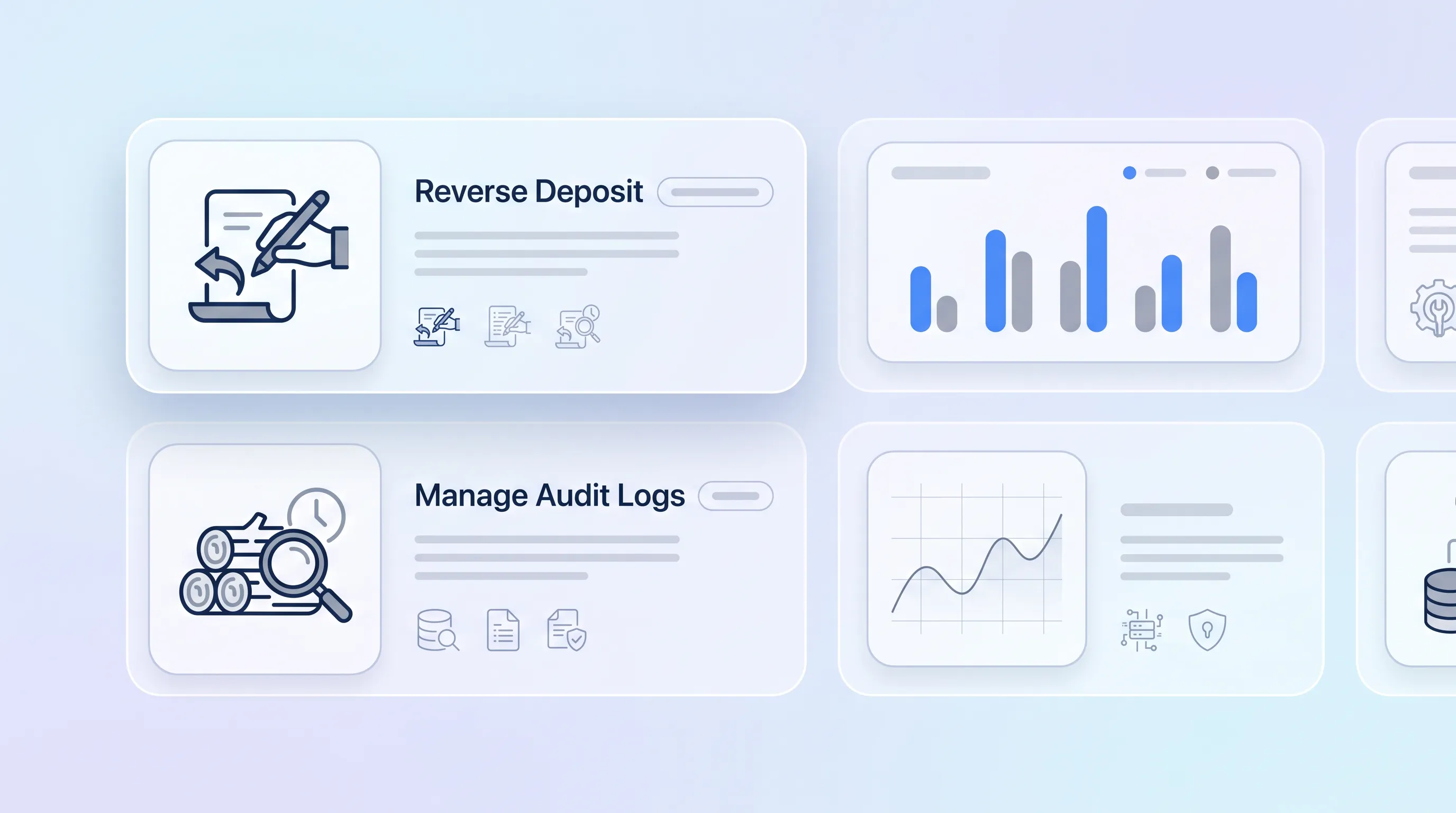
Clean and modern layout with rounded UI cards, digital signature icons, and bar charts on a soft blue and white gradient background.

Organize your requirements around the records the society keeps and the rules it applies, then around the transactions it posts and the evidence it can produce afterwards. That framing keeps a mixed buying team from arguing about screens. Finance cares about the ledger and operations cares about turnaround.

Write each requirement as something a person does on a given day. "Reverse a wrongly posted deposit and leave both the original entry and the correction visible in the audit log" tells a vendor far more than "audit trail support." The sacco software market in Kenya is crowded enough that every product brochure claims the same twenty capabilities of a sacco management system.

Ready to digitise your financial institution?

Talk to our team about your roadmap and discover scalable digital banking solutions tailored to banks, fintechs and microfinance institutions.

Request a Demo →

SACCO software Kenya essentials

These are the records and rules a society touches every week, and they're where SACCO software Kenya demos look convincing while hiding the exceptions.

  • Member records that hold identification, employer, common bond, status changes, and the full history of a member who left and rejoined

  • Share capital held separately from deposits, since shares can't be pledged as loan security and aren't refundable the way deposits are

  • Deposit categories covering non-withdrawable BOSA balances and, for licensed societies, withdrawable front office accounts

  • Payroll deduction handling that imports employer schedules, matches part-payments to the right member, and flags shortfalls

  • Member statements, account closure with liability clearance, and posting of dividends and interest on deposits once the general meeting approves the rate

That last point carries real money. Across regulated societies, the average dividend on share capital was 10.46% in 2024, down from 10.92%, with interest on member deposits averaging 7.14%. A rounding rule or a wrong qualifying-balance calculation at that scale produces a correction exercise nobody wants to run by hand.

Lending and guarantor controls

Guarantorship is where cooperative lending departs from everything else, and it's the part a general-purpose sacco management system fakes. Regulation 32 of the Deposit-Taking Sacco Business Regulations, 2010 requires that all loans be fully secured and bars lending against a member's shares. The system has to enforce that at application.

Ask how eligibility rules are configured and by whom. Multiples of deposits and minimum membership period need to live in configuration rather than in code a vendor changes for a fee. Then ask the harder questions: how does a guarantor's committed amount get released when the loan is repaid, and can the system block a member from guaranteeing beyond their own uncommitted deposits?

Arrears handling deserves equal scrutiny. The sector's non-performing loan ratio rose to 8.2% in 2024 from 7.5%, driven partly by Sh3.49 billion in salary deductions that employers collected and never remitted. Your system needs to classify and provision those loans in line with the regulations and IFRS 9, and it needs to show the full chain from disbursement through every repayment allocation and correction. It should also support credit decisions with a clear audit trail.

Access and integrations

Role-based permissions and approval workflows are the control layer that an auditor will test first. Who can create a member and who can reverse a posting, and can any single person do both? If the answer is yes for one account, the configuration is wrong no matter how good the ledger is.

Mobile money connectivity is no longer optional. The Central Bank of Kenya recorded 473,536 active agents in December 2025, and those agents handled KSh 722.5 billion in monthly value. SASRA's June 2023 circular on third-party financial system integrators requires bi-annual security audits of vendor contracts and full IT audits covering change management and identity controls, so your integrator is part of your compliance position.

Then there's data protection. Section 18 of the Data Protection Act, 2019 bars anyone from acting as a data controller or processor without registration, and a registration certificate runs for 24 months. Breaches carrying real risk of harm go to the Data Commissioner within 72 hours. Ask where member data is hosted and who holds the encryption keys, because a sacco management system vendor that can't answer those questions in writing will not answer them better after signing.

Ready to digitise your financial institution?

Talk to our team about your roadmap and discover scalable digital banking solutions tailored to banks, fintechs and microfinance institutions.

Request a Demo →

Test the member journey

The cleanest way to evaluate a sacco management system is to make the vendor run one member all the way through in a live session. Start with registration and a share capital purchase, then take the same member through to closure with the guarantor liabilities cleared. Don't accept recorded videos.

Then break it on purpose. The exceptions are where systems fail, and where your staff spend half their time.

  • Reverse a deposit posted to the wrong member and show both entries in the audit log with the operator name and timestamp

  • Substitute one guarantor for another mid-loan and show what happens to each guarantor's committed amount

  • Post a backdated payroll schedule for a month that has already closed, then regenerate the affected member statements

  • Produce a member's balance as it stood on 31 December two years ago

  • Attempt an action that breaches an approval limit, then show the queue it lands in and who can release it

Write down what you asked and what happened. That record becomes your evidence file later.

Build a requirements matrix

The vendor evaluation should focus on demonstrated functionality rather than promises. Each capability should be assessed against its business purpose, priority, applicable society category and required evidence. Critical requirements include guarantor commitment and release, separation of share capital from deposits, SASRA statutory returns, reversal and correction logging, and role-based access and approvals. These should be demonstrated live and supported by relevant reports, sample statements or audit logs. High-priority requirements include payroll deduction import and matching, particularly the handling of partial employer remittances, and daily mobile money reconciliation, supported by unmatched transaction reports and resolution workflows.

Each requirement should receive a score from 0 to 5, where 0 means the functionality does not exist and 5 means it has been fully demonstrated, documented and independently verified. Vendor assurances alone should not count as evidence. Finally, request two references from organisations in the same society category and contact them without the vendor present, specifically asking what broke during the third month of implementation.

Plan migration and implementation

Migration is the risk. Gartner's estimate, cited in GFT's migration material, is that 83% of data migration projects exceed budget or schedule or fail outright. Karl im Brahm, chief executive for the DACH region at Objectway, puts it bluntly: "Around 80 percent of all migration projects fail, usually due to incomplete or incorrect data." Independent work is less dramatic but points the same way, with McKinsey finding full-scope completion closer to 30% of transformations studied.

So sequence it properly. Cleanse records before mapping, because duplicate members and orphaned guarantor links will survive any export. Map every field with a named owner on both sides. Reconcile opening balances account by account, not in total, and run the old and new systems in parallel for at least one full month-end that includes a statutory return.

Cost has more parts than the license fee, and most sacco software Kenya proposals show you only two or three of them. Budget separately for licensing and the staff hours your own team loses to testing and training. That last line is the one boards consistently underestimate.

Assess vendor support

A sacco management system is a ten-year relationship with whoever maintains it. The KUSCCO affair, where a forensic audit found roughly KSh 13 billion in mismanagement against about KSh 5 billion in recoverable assets, is a reminder of what happens when institutions in this sector trust reputation over verification. Apply the same scepticism to technology partners.

Compare on documented things. Who owns implementation, the vendor or a reseller? What response time is contractual rather than aspirational? Can you export your full data set and the audit history in a readable format on thirty days' notice? Is there a published roadmap with dated releases, and how are upgrades priced? Where a vendor claims SACCO experience, ask for the society name and the go-live year.

Doocat is one of the platforms a Kenyan buyer will come across, built by Energize Global Services for microfinance institutions and digital banks. Its published product documentation describes loan origination and servicing and REST and webhook integrations. Treat that as the starting point for a conversation about cooperative-specific requirements like guarantor liability.

Shortlist SACCO management system vendors

Score each vendor on functional fit and regulatory alignment to your category. Decide the weightings before the demos, and negotiate price only after the evidence file is complete.

Doocat builds core banking software for microfinance institutions and cooperative lenders, with migration tooling for moving off legacy platforms. Book a call with our team to discuss how a sacco management system should fit your society.

Ready to digitise your financial institution?

Talk to our team about your roadmap and discover scalable digital banking solutions tailored to banks, fintechs and microfinance institutions.

Request a Demo →

Prepare your chart of accounts, product rules, sample member and loan records, current reports, approval matrix, and integration list. Include two months of anonymized transaction files and exception cases. Vendors can then demonstrate your real processes instead of presenting generic screens that hide configuration gaps.

Run the pilot through a complete month-end, including payroll posting, loan repayments, reconciliations, reporting, and corrections. Add a second cycle if payroll dates or dividend calculations create timing issues. Set written exit criteria before testing, such as balanced ledgers, approved reports, and resolved critical defects.

Yes, but each channel needs a controlled cutover plan. Confirm settlement accounts, transaction references, duplicate-posting controls, failed-payment handling, and daily reconciliation before switching systems. Keep the old connection available during the agreed rollback period, and record who approves channel changes.

A sandbox lets your team test configuration without changing live member records. Use it to check permissions, approval limits, reports, imports, reversals, and data exports with anonymized records. Make access, refresh rules, and the period before production cutover part of the contract.

Ask Doocat to demonstrate your member, share, deposit, guarantor, payroll, and reporting workflows using agreed test cases. Request written answers on data export, support response times, upgrade pricing, hosting, and regulatory reporting. Compare the evidence with the same checklist used for every shortlisted sacco management system.

Schedule a Meeting

Book a time that works best for you

You Might Also Like

Discover more insights and articles

Two diverse professionals engaged in a friendly discussion over a tablet in a bright, modern office with large windows and blurred coworkers.

Murabaha Financing: Contracts and Examples for African Banks

This article walks through how murabaha financing becomes a working bank product: the transaction sequence and the controls your core system has to enforce. It is written for the teams who have to build the thing and then defend it in an audit.

Close-up of hands holding a smartphone displaying a banking app, set in a cozy home office with blurred background elements.

Mobile Money Interoperability in Ghana: How GhIPSS MMI Works

This article maps the four transfer flows supported by Ghana's national mobile money interoperability platform and shows who owns each step of them. It covers transaction direction and the questions to settle before a new connected channel goes live.

A business manager discusses loan strategies in a bright office, holding a tablet displaying a banking dashboard, with employees working nearby.

How African MFIs Can Reduce Fraud in Cash Loan Collections

Cash collection fraud shrinks when every repayment carries a unique, device-generated receipt reference tied to one borrower and one loan, and when the officer who collects cash never posts or reconciles it. Add daily handover matching and an independent borrower complaint channel, and most leakage becomes visible within 24 hours instead of months.

A business-casual office worker demonstrates a payment process on a smartphone to a customer in a bright, modern office setting.

Ijara Financing: Asset Leasing Workflows for African Banks

This article walks through how an asset-based lease moves from supplier quotation to contract closure inside a bank, and what each step leaves behind in documents and system records. It is written for the teams that have to build or review that workflow together.