Contract closure
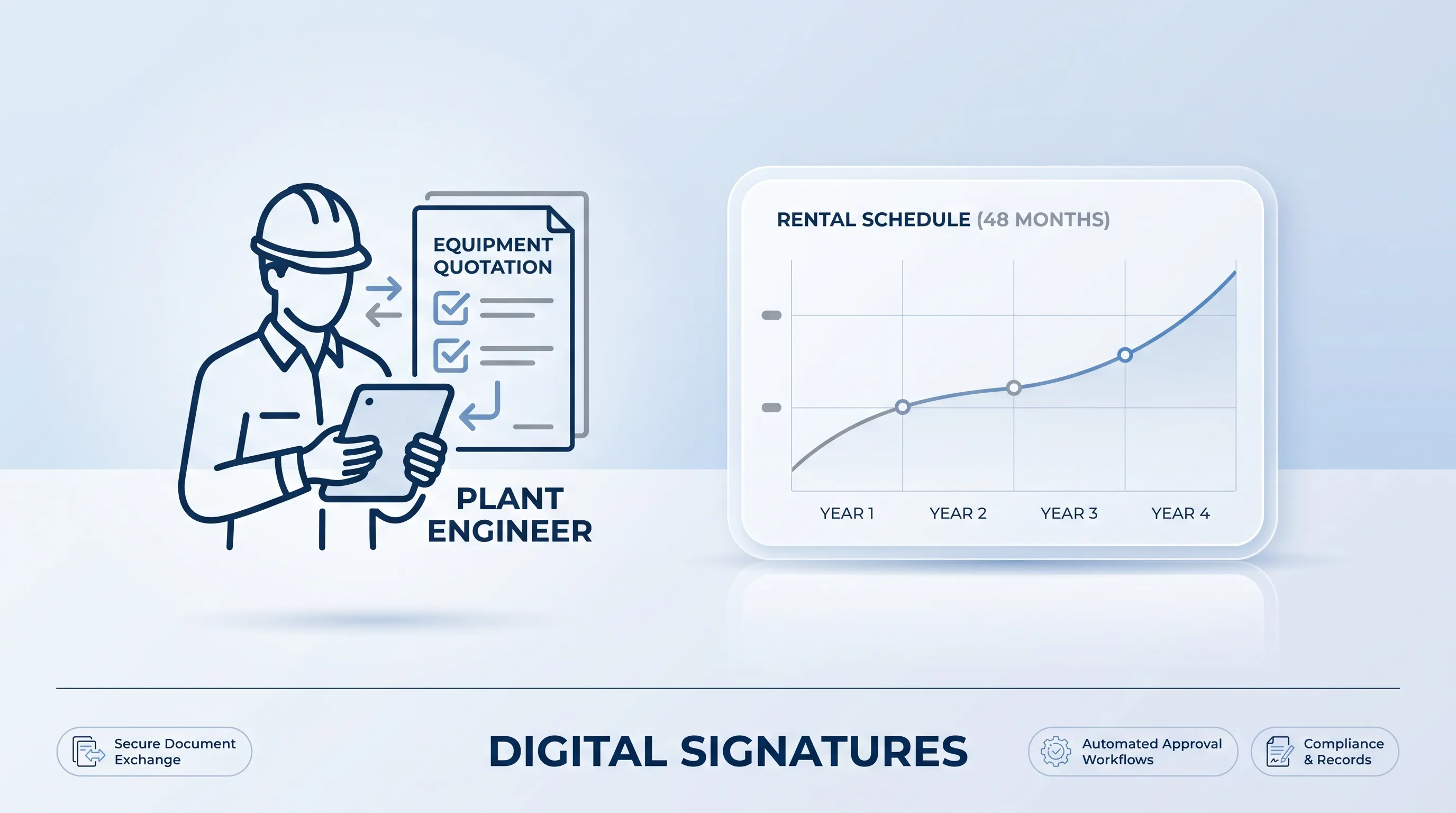
Closure produces its own evidence: a return and inspection note or an ownership transfer file. Each path has a different accounting consequence, and the system status reflects which one ran.
Transfer deserves care. AAOIFI requires the transfer method to sit in a separate document from the ijara contract, whether by promise of sale or promise of gift, so a lease and a sale are never collapsed into one contract. Whatever mechanism your institution uses has to match the approved contract and the governance framework your board signed off.
Responsibilities needing review
Some questions cannot be settled by a product team alone. The default position in ownership-related expenditure is that the lessor bears it while the lessee bears usage costs, but national law and tax treatment will shape the answer in each market.
Put these in front of legal and Sharia governance before the workflow is built:
-
Which maintenance is the bank's and which is the customer's.
-
Who procures takaful or insurance, and who is the beneficiary.
-
How damage and total loss affect rental obligations and termination.
-
Which VAT and transfer duties attach to a bank-owned asset in the jurisdiction at closure.
-
What the approved ownership-transfer mechanism is and what evidence it requires.
In Nigeria, for example, the CBN's guidelines on non-interest financial services list ijarah among permitted financing modes, while a separate instrument requires every institution to maintain a board-appointed Shariah Advisory Committee. Islamic leasing decisions made without that body's sign-off are decisions you will revisit.
Operational exceptions
Delayed delivery is the common one. If the asset is unavailable, rent stops accruing and the schedule has to shift. The evidence trail is the supplier's revised delivery date and the approval that authorized the shift.
Rejection and unusability follow the same logic. Where the asset delivered doesn't match the description, the lessee can reject it, which means the ijara contract cannot activate and any provisional accrual must be reversed. Damage mid-term raises a different question, and your clause on negligence decides who pays.
Early termination needs a defined escalation path. IFSB-31 tells supervisors to expect clear escalation procedures for timely corrective action inside the risk framework, and an ijara financing exception that stalls between operations and the Sharia function is exactly the kind of gap that produces one. Decide in advance which exceptions go to a committee and which a branch manager can clear.
Systems and traceability
The asset register is the backbone. Every leased asset needs a unique identifier and a live link to the lease that uses it. Rental schedules are generated from activation data and versioned whenever a variation is approved.
Documents need to hang off the record they prove, so that opening a contract shows the quotation and the acceptance note in one place. Approval history captures who approved what and when, along with overrides. Jared Rasugu, finance director for Kenya's Kisii County, has pointed out that sharia-compliant products demand different approaches to revenue recognition and asset classification than conventional instruments, and the audit trail has to support that treatment.
Doocat's Islamic banking module includes lease-based products with asset leasing workflows and ownership transfer options. Configuration is not certification. Doocat states plainly that Sharia certification is granted by your institution's Sharia board against a specific deployment, and the same holds for ijara financing treatment under your regulator, your auditors, and your tax authority.
A core banking platform can provide the wider transaction, account, approval, and audit infrastructure around these asset workflows.
Conclusion
The workflow holds together when ownership and availability are recorded as separate facts with separate evidence. Get the activation control right and most downstream problems disappear.
Doocat builds core banking software with Islamic finance product types and lease-based asset workflows for institutions across African markets. If you are designing or reviewing ijara financing operations and want to see how the asset register and rental schedules fit together, book a call with our team.