Doocat

Pan-African Payment and Settlement System: How Banks Can Connect

Content authorBy DoocatPublished onReading time12 min read
A bank advisor in business casual attire engages a customer at a modern conference table, showcasing a KYC onboarding tablet interface.

This article walks through what connecting to the Pan African Payment and Settlement System actually involves for a bank or payment service provider: the participation routes and the decisions that have to be made before a single live transaction moves. It's written as an implementation guide.

Why the connection decision is harder than the business case

The business case for the Pan African Payment and Settlement System writes itself. Sending money between two African countries still runs through correspondent banks outside the continent, and it costs 7-8% of the value sent on average, with settlement taking three to seven business days. Intra-African trade is worth US$220.3 billion a year, and almost none of it settles in African currencies.

So the question is what your institution has to become in order to use one. That means a settlement account or a sponsor and a support desk that knows what to do when a payment fails at 3pm on a Friday. This guide covers that work in the order you'll face it.

What PAPSS does

The Pan African Payment and Settlement System is a cross-border financial market infrastructure owned by Afreximbank and adopted by the African Union as the payment platform for the African Continental Free Trade Area. A payer instructs their bank in local currency. The beneficiary receives local currency in another country. No dollar leg sits between them at the customer level, which is the whole point of the PAPSS payment system.

Coverage is real but uneven, and you should check it against current official PAPSS information before building a corridor strategy. As of 2025 the network reached 19 countries with 14 switches and more than 150 commercial banks. A January 2025 review by tralac counted only 76 commercial banks live across 12 countries, which tells you that joining the network and being reachable on a given corridor are two different things. The reach also extends beyond Africa, since the central banks of CARICOM adopted the PAPSS payment system for intra-regional settlement in 2023.

A payment end to end

Follow one supplier payment. A Ghanaian importer instructs their bank in cedis. The bank validates the instruction and sends it to the Pan African Payment and Settlement System using ISO 20022 messages, the same standard the Bank for International Settlements tracks in its work on cross-border payment interoperability. PAPSS runs its own validation and forwards the instruction to the beneficiary's bank in Nigeria, which credits naira. The first such live client transaction was an inaugural PAPSS client payment from Ghana to Nigeria executed by GCB Bank in March 2023.

That customer experience takes seconds. The money movement does not. Clearing accounts on the PAPSS payment system are prefunded, and net settlement across all participating central banks happens at 11.00 UTC each day on a next-business-day basis. Your treasury desk lives in that gap between the instant credit to the customer and the settlement that follows.

Which means three things need owners inside your institution before go-live. Someone has to decide how much liquidity sits in the clearing account and who tops it up. Someone has to own the foreign exchange rate your customer sees. And someone has to reconcile the intraday flow against the net settlement figure the following day.

Pan-African Payment and Settlement System

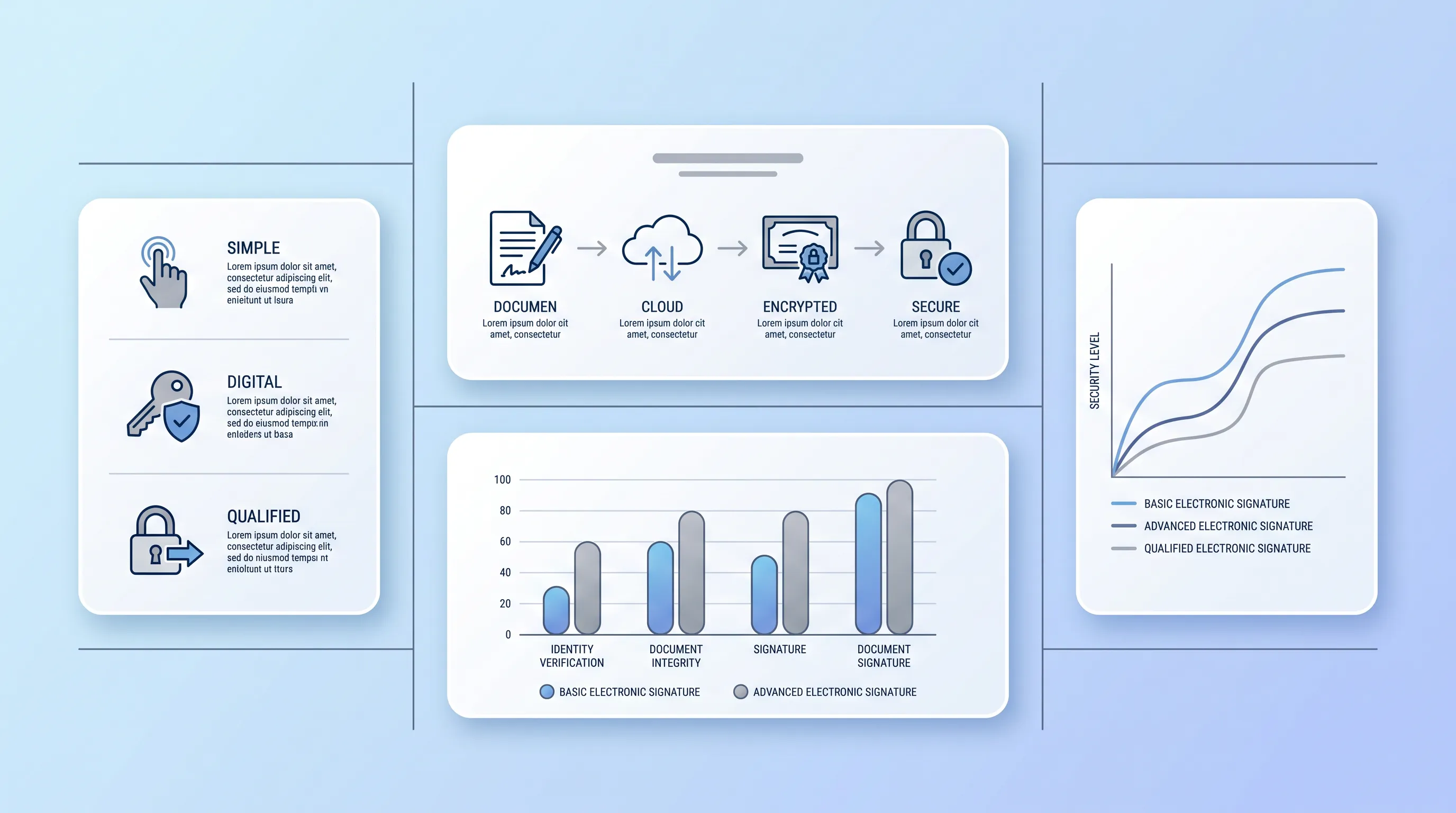
Infographic comparing indirect participant banks in a banking operation room, featuring structured UI cards, icons, and charts on a soft blue gradient.

Every Pan African Payment and Settlement System integration decision collapses into four questions, and you can answer them in order. Does your institution meet the eligibility criteria in the PAPSS Bye-laws? Do you hold settlement access with your domestic central bank, or do you need someone else's? Can your existing systems carry the messaging and reconciliation load? And which participation route fits the answer to the first three?

The eligibility bar is specific. Each applicant must be a separate and single legal entity, so a group with multiple licensed subsidiaries applies separately for each one. From there the route splits.

Ready to digitise your financial institution?

Talk to our team about your roadmap and discover scalable digital banking solutions tailored to banks, fintechs and microfinance institutions.

Request a Demo →

Direct participation

A direct participant is a bank or financial institution that holds a domestic central bank settlement account in each country where it uses the service and holds a full banking license. Direct participants integrate with both the Pan African Payment and Settlement System and the central bank's real-time gross settlement (RTGS) system for the prefunding cycle.

That route gives you control and hands you the obligations. You fund and defund your own clearing account, and you carry the liquidity risk of an underfunded position. Central banks themselves are direct participants and act as national settlement agent.

Indirect PAPSS integration

An indirect participant signs a sponsorship agreement with a domestic direct participant, which provides settlement services in each country where the indirect participant uses the Pan African Payment and Settlement System. Under those sponsorship agreements with direct participants, the sponsor issues funding instructions and supplies the liquidity that funds or defunds the clearing account.

The sponsor absorbs the settlement mechanics, and your obligations remain with you. Customer due diligence and your reconciliation stay with you. A sponsorship agreement is a funding and settlement arrangement, so read it as one and don't assume it transfers liability for a payment you originated.

Route comparison

Direct participation requires a central bank settlement account and a licence in each country of operation. You fund your own clearing account through the central bank’s RTGS system, manage direct connectivity to PAPSS and the RTGS, and handle full ISO 20022 message generation and parsing. You are also responsible for incident handling with PAPSS and the central bank.

Indirect participation requires a sponsorship agreement with a domestic direct participant. The sponsor provides liquidity and issues funding instructions on your behalf. Connectivity is managed through the sponsor or a technical connectivity provider, with a narrower message scope. You handle customer-facing support, while the sponsor takes ownership of settlement incidents.

Neither route wins on its own terms. Direct participation costs more to build and gives you pricing control plus independence from a competitor's balance sheet. Indirect participation gets you live faster and leaves your corridor economics partly in someone else's hands. A licensed bank with an existing RTGS account that already handles treasury in several currencies has little reason to go indirect. A payment service provider without central bank settlement access has no choice to make.

Settlement and liquidity

The central bank in each country or region selects the settlement model when joining the network, and it determines who funds settlement and who sets your rates. The Pan African Payment and Settlement System operates two: the Central Bank Settlement Model, known as SSA-1, and the Commercial Bank Settlement Model, known as SSA-3.

Under SSA-1 the central bank provides the settlement funds and sets the applicable foreign exchange rates. Participating commercial banks fund their accounts at the central bank in local currency, and the central bank acts as national settlement agent with oversight across the process. Under SSA-3 the participating commercial banks provide the settlement funds and set the rates themselves, and they manage settlement risk and limits directly. There's no requirement to use the central bank RTGS under that model, though the central bank keeps its supervisory role and full visibility of settlements.

The practical difference lands on your treasury and pricing teams. Under SSA-1 you take the rate you're given and your margin comes from fees. Under SSA-3 you own the rate and the spread. Confirm which model applies in every country on your corridor map before you model revenue, because the same corridor can have different answers at each end.

Liquidity is the constraint nobody plans for early enough. PAPSS cannot create depth in a currency pair that has none, which is why it launched the African Currency Marketplace with Interstellar in 2025, an order-book venue where 80 corporates traded 12 pairs during the pilot. "Payments alone were not enough," said Mike Ogbalu III, CEO of PAPSS. "Firms still face trapped capital due to limited currency convertibility and dependency on hard currencies."

Ready to digitise your financial institution?

Talk to our team about your roadmap and discover scalable digital banking solutions tailored to banks, fintechs and microfinance institutions.

Request a Demo →

Define the operating model

Write this down before you touch a single interface. The operating model is the document your compliance committee approves and your vendor builds against, and it fails because nobody assigned an owner to each line.

  • Scope and limits: which transaction types you'll support, which currencies and corridors, per-transaction and aggregate limits, and the documentary evidence each payment requires.

  • Money and pricing: prefunding thresholds and top-up triggers, who sets the customer rate under your country's settlement model, fee structure, and how you book the spread.

  • Compliance: sanctions and anti-money laundering screening at origination and receipt, how you handle hits without breaking the near-instant customer promise, and your escalation route to the central bank.

  • Operations: daily reconciliation against the net settlement position, returns and recalls, exception queues, service levels with your sponsor or vendor, and regulatory reporting.

  • Resilience: encryption and key management, access controls for operations staff, failover, and what the fallback is when the rail is unavailable.

Regulatory scope deserves particular attention, because it varies by country and it changes. The Central Bank of Nigeria originally restricted eligible payments to trade-backed transactions only, with imports limited to goods of African origin and documentation required before initiation. It then relaxed the regime through an April 28, 2025 Circular on documentation requirements, after setting a threshold of $2,000 per month for individuals and $5,000 for corporates with basic know-your-customer and anti-money laundering documents only. Build your rules engine so those thresholds are configuration.

Plan the implementation

Assess and apply

Start with demand. Pull your own correspondent banking data for the last twelve months and find out which African corridors you already serve and what they cost you. That evidence is what gets Pan African Payment and Settlement System integration approved internally, and it also tells you which corridors to pilot.

Then run eligibility and route selection against the criteria above, and if you're going indirect, do proper due diligence on the sponsor. Look at their settlement track record and their liquidity capacity in your corridors. Engage your central bank early, because in several markets its approval and its settlement model choice determine what you can offer. Only after that do onboarding forms and account setup make sense, followed by the due diligence and network connectivity checks PAPSS runs before you can process transactions.

Connect and test

The technical work centers on ISO 20022. Direct participants generate and parse the messages themselves across the payment and settlement flows. Indirect participants connect through a sponsor or a technical connectivity provider, which abstracts part of the messaging but not the mapping work, since your core banking fields still have to land in the right places. Pesalink in Kenya took exactly that role and linked 80 plus network participants to the Pan African Payment and Settlement System platform as a technical connectivity provider.

Certification and end-to-end testing come next, and the tests that matter are the unhappy ones. Test an underfunded clearing account. Test a sanctions hit mid-flight. Test a beneficiary account that's closed and a reconciliation break between your ledger and the net position the PAPSS payment system reports the following morning. If your operations team can't resolve each of those in a test environment, they won't resolve them in production.

Roll out safely

Pilot one corridor. KCB Group and Bank of Kigali did it this way in February 2025. They went live as the first banks in their markets before expanding. "For PAPSS to deliver true impact, collaboration with national and private switches is essential," Ogbalu said of the approach to building reach channel by channel.

Train branch and support staff on what the customer sees and what happens behind it, and start with conservative transaction caps. Set acceptance criteria you can measure before you widen the Pan African Payment and Settlement System integration: straight-through processing rate and the number of payments that failed for liquidity reasons. Expand corridors only when those numbers hold for a defined period.

Questions before commitment

Ask these before you sign anything, and get the answers in writing.

  1. To PAPSS: which settlement model applies in each of our target countries, what are the current eligibility requirements for our institution type, which participants are live and reachable on our priority corridors, and what does the certification timeline look like?

  2. To a prospective sponsor: what liquidity do you commit to in each corridor and under what conditions can you withhold it, how is the foreign exchange rate set and what spread do you take, what are your service levels on settlement incidents, where does liability sit when a payment fails, and what happens to our customers if we terminate the sponsorship?

  3. To your technology provider: how do you map our core banking records to ISO 20022, who owns certification, how are schema changes to the PAPSS payment system handled and at whose cost, what reconciliation and exception tooling comes with the platform, and what are the exit terms if we move to direct participation later?

The exit question is the one most institutions skip. Indirect participation is a sensible entry route into the Pan African Payment and Settlement System, and it becomes a trap if the contract makes leaving expensive.

Infrastructure support boundaries

Most of the work described here is ordinary payment infrastructure work: ISO 20022 mapping and multi-leg reconciliation. Doocat builds exactly that layer for banks and fintechs. This does not mean Doocat currently connects to PAPSS, and you should verify both our capabilities and current PAPSS requirements directly. If you're scoping Pan African Payment and Settlement System integration and want your core and reconciliation ready for it, book a call with the Doocat team before you commit to a route into the Pan-African Payment and Settlement System.

Ready to digitise your financial institution?

Talk to our team about your roadmap and discover scalable digital banking solutions tailored to banks, fintechs and microfinance institutions.

Request a Demo →

Yes, a payment service provider can participate indirectly through a domestic direct participant. The sponsor supplies settlement liquidity and handles its funding instructions, while the provider remains responsible for customer due diligence, payment instructions, reconciliation, support, and the liabilities assigned in the sponsorship agreement.

First, protect the customer ledger by recording the debit and the payment status separately. Route the case to an exception queue, identify whether liquidity, screening, message validation, or the beneficiary account caused the failure, then apply the approved return or recall process and tell the customer when funds will be restored.

Record the transaction reference, sending and receiving institutions, amount and currency, timestamps, message status, failure reason, screening result, staff actions, and final resolution. Link the record to the customer ledger and the next settlement report so operations can explain every difference during reconciliation and regulatory reviews.

Expand only after the pilot meets written acceptance targets for a defined period. Review straight-through processing, liquidity-related failures, reconciliation breaks, return handling, and support response times. Keep transaction caps conservative until those results remain stable under normal volume and tested exception conditions.

Field-level testing confirms that customer, account, currency, amount, remittance, and compliance data move correctly between your systems and the pan african payment and settlement system. It also exposes mapping errors before certification. Doocat can review core-banking and reconciliation requirements, but you should confirm current PAPSS specifications directly.

Schedule a Meeting

Book a time that works best for you

You Might Also Like

Discover more insights and articles

Two professionals in a bright office engage over a tablet, discussing repayment schedules, with blurred coworkers in the background.

How African Lenders Can Structure Farm Loans Around Seasonal Income

Build the schedule around the dates cash actually arrives. For a rain-fed crop, that means staggered disbursements through the season and installments timed to partial sales and buyer settlement. Pricing and arrears rules follow from that cash-flow map.

Two branch managers discuss data visualizations at a workstation, surrounded by monitors in a collaborative office environment.

How African MFIs Can Improve Regulatory Reporting Accuracy

Accurate regulatory returns come from control. Standardize definitions across branches and map every reported field to a named source system. Technology helps only after those definitions and controls exist.

A finance team of three professionals discusses credit submission processes around a modern conference table in a bright office.

Credit Bureau Reporting in Kenya: A Practical Guide for Lenders

This article walks through the operational side of credit bureau reporting in Kenya: what you submit each cycle and how to validate it. It then covers what to do when records bounce back and which evidence to keep for your next examination. It's written for the teams that build and sign off on the monthly file.

A business analyst in an executive suite discusses market data on a tablet with a colleague, surrounded by a modern office setting.

Open Banking API Provider Selection Guide for Banks and Fintechs

This article explains how to turn product and regulatory requirements into a selection process you can defend with evidence. It covers provider models and a weighted scorecard your teams can fill in together.